top of page
Horror Tropes
Tropes are a recurring theme, character or plot point it can also be referred to as a motif. I'm researching horror tropes to further my knowledge into the genre not only will this help me to know what will help my short film but also what tropes to avoid. I got this information from the website Raindance.
Jump scare:
In simple terms a jump scare is a moment when somethings scary happens surprisingly. This trope has always been used but as of late has become increasingly popular and can be seen in nearly all modern horrors. I believe this trope is very engaging if done right, the most effective way it can be used is when there is built up suspense the audience can feel that somethings not right and at the climax the jump scare happens. I feel as if this will be an asset to my short film and I will highly consider using it.
No signal:
This tropes is definitely more common in recent horror however it acts to mend a potential plot hole. Because of the advancement and sudden necessity of technology it almost seems inconceivable that a victim in a horror film wouldn't ring for help. Which is why a phone has to be eliminated and the most common way this is done is through having no signal. This will be something I will have to consider for my short as it is set in modern day.
The abandoned place:
In many horror films the characters find themselves in an abandoned location such as a log cabin, house and etc. I find this trope often adds to the sense of fear in a film because there's no help available which creates a desperate feeling for the characters. Often the places are made to look desolate which allows the set design to become more creative. Although I do think this is a creative way to add a sense of fear I won't include this trope in my short film because it wouldn't make sense in my narrative.
The vengeful spirit:
If an audience is introduced to a ghost in a horror film we often discover that the ghost is enacting some form of revenge by terrorising the main characters. This trope is essential for any horror media involving ghost because it gives background and a deeper characterisation of the ghost. Furthermore the mystery of why the spirit is attacking the main characters is often a big plot point and ends up helping the characters defeat the spirit in the end. I will not be using this trope as my narrative has a person as the "bad guy" rather than a spirit.
The final girl:
Often when a horror involves a wide range of characters each is killed one by one usually leaving what the audience perceived as an easy target (a young timid girl) to survive. Creator's do this because the audience will always want the under dog to win it's an easy way to gain sympathy for a character by having them appear the most endangered and give the character a big arch if they defeat the bad guy. Although in my narrative I will only have one character in danger I will consider having my character be vulnerable to allow for a better story arch.
Codes and conventions:
Low key lighting:
Often in horror the lighting is low key which gives the image an overall darker look which conveys a sense of mystery and fear to the audience. I think a big part of this is the shadows that it creates by physically showing less of a character the audience can feel intimidated or as though they don't know the character because they cant see their whole appearance. Compared to how a comedy films lighting would be bright to reflect the happy mood a horror films lighting would be dark because the themes are dark.
Dark colour palettes:
Similarly to the low key lighting a dark colour palette in a film sets the mood for a darker toned film. Many horror films take place at night for this reason the creator can instantly have a dark colour palette and often where there is light tends to add a blue hue which gives the setting an airy feel.
Pathetic fallacy:
This term means when the weather reflects a mood or atmosphere although it is used a wide variety of genres we can also see the effects in the horror genre. Often in horror films the weather is rain or some kind of storm which gives the setting a gloomy atmosphere. This is a great way to give your audience a feeling of a fearful atmosphere right from the establishing shot. Although this would be a good idea for my project it will not be feasible.
Young children:
Often in a horror film the creators use young children either as the victim or as a creepy character (the twins from the shining). If a child is used as a victim it's because they create more sympathy from the audience due to children having connotations of being vulnerable and innocent. Hence why they are then also used as a creepy character because of the juxtaposition of the connotation of being innocent vs the evil character they are this makes them more frightening to an audience.
Narrative Theory:
I decided to research narrative theory to help develop my skills in order to create a successful script and story board. In past projects I have struggled with creating good story arch's and with this project relying heavily on developing a good narrative I think this research is crucial.
Todorov:
The basis of this theory is how a typical narrative story should play out this involves the following steps;
1)A state of equilibrium
The start of a narrative is tranquil with very little happening this stage is used to introduce characters and also create a false sense of security.
2)Disequilibrium
This stage is where a disruption happens often creating the first instance of fear for a horror film.
3)A recognition that the disequilibrium has occurred
In this stage the main character and the audience realise that the there is real danger.
4)An attempt to repair the damage
In a horror film this occurs when the main character decides to fight back against the villain of the narrative.
5)Restoration
This stage is the after the resolution it often shows how the characters are after the events have taken place and show some attempt at living normally again.
Propp:
This theory is based on folk stories which states every narrative has a certain set of main characters to help the plot. Taking this theory I have applied it to the film The Cabin in the Woods (Goddard, 2012) however I do find this theory out dated for the film I applied it to.
Hero:
Dana, I wouldn't class her as the typical hero even though she does save Holden's life all the characters save or attempt to save each other at some point in the film. However I have interrupted the role of hero more as the main character. Furthermore we she her act with more virtue than the others in the cabin.
Villain:
The organisation, by this I'm referring to the people who are behind setting up the cabin sequence. Although we later find out that their jobs are for the greater good the way in which they toy with the main characters and even celebrate when they believe all the characters are dead reflects their evil nature.
False hero:
Curt, the film displays Curt as a typical jock with an alpha male complex at the start of the narrative he appears as the leader of the group. As the film progresses he also nearly saves the rest of the group when he risks his life trying to get help however ends up dying. Although Curt conveys traits of a typical hero he ends up failing and does nothing to save the group.
Princess:
Jules, this character is portrayed as a typical 'dumb blonde' character who can not defend herself. In the scene where Jules dies she doesn't defend herself and just allows Curt to attempt to save her.
Dispatchers:
The security, at the end of the film we see the security attempting to defend the organisation from all the monsters that have been unleashed.
Victim:
The group, throughout the film all of the characters from the cabin are terrorised and all end up dying in drawn out painful ways.
Also in this theory are characters helper (the person who helps the hero) and the Father figure (someone who gives advice to the hero) however I could not successfully apply these The Cabin in the Woods.
Levi-Strauss:
This theory uses the concept of binary opposites stating that in order for a narrative to be successful it has to include conflicting ideas or visuals. For example I have applied this theory to A Quiet Place (Krasinski,2018) .
Adults vs Children:
The film focuses on a family which includes two parents and their two children although mostly they appear strong as a family unit they conflict through out. The children's naivety to the struggles of the new world they live in are most apparent in the start of the film, when despite the parents making it obvious that Beau ( the youngest child) is not allowed a toy because it makes noise. Despite the high risk the eldest child Regan takes the toy and gives it to her brother which results in his death. Situations like this are reflective of the difference of maturity between the children and the adults the contrast in decision making ended up being the difference between life and death.
Scream Analysis:
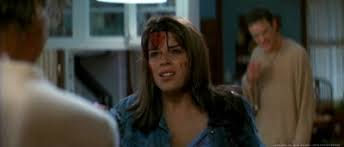
I decided to analyse this scene because this is where I got the inspiration for my project also I find this scene perfectly builds tension and is an extremely good opening to a film. In this analysis I will try to determine how the scene builds tension by examining how micro-elements are used.
Lighting:
This scene is set in Casey's house the character is lit well throughout however through the use of lamps the background cast shadows. This has the effect of making the audience subconsciously realise that the house is empty and she is alone. The creators used light to show how scared she is after the killer says "I want to know who I'm looking at" after this line of speech she proceeds to turn the patio lights on and check the the garden. We as humans find the light to be protective and comforting so when Casey does this it encourages the audience to believe she is in real danger. Overall however I don't think this scene had a particularly interesting light set up.
Sound:
The first effective use of diegetic sound is the establishing shot of Casey's house this shot is used to show how deserted her house is, on top of this there's sounds of crickets, the wind and the swing moving. These sounds highlight the lack of sound emphasising how alone her house is. Also there is great use of music in this scene, every time something troubling happens we hear a spike in music which enhances the feeling of danger to the audience. Another interesting use of music is when the killer first threatens Casey there's a slow drum to reflect a heart beat it's really successful in creating a daunting atmosphere. Overall I think sound and music was used subtly but very effectively and was a major part of creating the tension in the scene.
Props:
This heavily relies on the phone that Casey uses, the prop is used as an inventive narrative tool without the phone in this scene the killer wouldn't be able to taunt Casey. Even in the clip i selected we don't see the killer and yet he is able to make the audience feel fear through the phone call which makes the whole scene even scarier. Another creative prop used is the popcorn it is heard popping throughout most of the scene and acts almost like a count down. It's a constant reminder to the audience that Casey is a very normal character and allows the audience to connect to her making her attempted escape more tense as the the audience is now rooting for her. Both props are incredibly creative and effective in building tension in the scene.
Kiss the girls Analysis:
I decided to use this scene from the film Kiss the girls (Fleder,1997) because I found myself as an audience member feeling very tense.
Lighting:
The first thing I took away from this scene is the blue hue in the lighting it allows the subject to be well lit with still giving the allusion that it's night time. This blue hue also gives the audience a slight airy feeling. The lighting remained the same throughout the scene with some areas of the set lit up by the blue light with the rest covered in shadow. This allowed the character Kate to move in and out of the shadow as she explores her house the use of the darkness creates a mysterious feeling as it leaves the audience wondering what could be hidden in the shadows. Also using the lighting they created rain shadows which carries into the convention of pathetic fallacy and creates a scarier atmosphere. The villain in the scene (Casanova) is hardly lit up and often moves in the shadows in the scene which increases the sense of mystery and fear the audience feels about the character.
Sound:
Throughout most of the scene there is a collection of diegetic sounds such as; creaky floor boards and the whistling of the wind. These sounds create a haunting atmosphere which in in turn adds to the tension. Also in the background there is a faint, intense, slow paced music track playing which tells the audience that something bad is going to happen. However when Casanova grabs Kate the music changes not only does it increase in volume becoming the main sound in the scene but it also increase in pace as Kate runs away from him. The music in this scene perfectly reflects what is happening especially when the music changes because there was an increase of danger. Furthermore there are thunder and lightning sound effects which empathises my previous point about the use of pathetic fallacy in this scene.
Extra:
The scene opened with a dutch angled shot of the alarm clock with the time on it being 3:11 am. This shot reflects the idea of the early morning being referred to as the witching hour also how confused and dazed Kate is in the scene. It's a really good use of an usual angle and works well in the scene.
Lighting:
From my analysis of Kiss the girls I decided to use the blue hue in my lighting set up because I really enjoyed the effect it gave the scene. Because I'm unsure of the best method to achieve this look I'm going to research different ways and hold a focus group on which method looks best within my scene.
After watching this video I decided to purchase some gels because they appear the easiest way to give an effective colour change. However because I currently don't have access to the colleges equipment I will test my gels using different lights I have at my house. This will help me work out exactly how I need my lights in order for them to give my desired colour. However for the rest of my scene I will be using very natural lighting to illuminate my subject so this is a lot easier to produce.
I watched a few videos about using gels however these were all in a photography studio set up and wasn't creating the same effect I'm after.
Because of my lack of resources I decided to make my own softbox in order to create my lighting with my gels. Although I will use studio lights when I'm filming my short I needed to test my blue gel for my focus group. After creating my first softbox using tin foil and cardboard which looked like this;
I then took these photos of my dog to ensure
my blue gels were creating the colour I wanted.
The first is with the blue gel the second is
without.
After being happy with my initial photos I decided to use this lighting on a person the first photo is without the blue gel and second is with it.
Although there is a change in lighting this is very slight and like it appeared on my dog previously so I decided to keep trying until I got the lighting I wanted. I felt this lighting didn't add a blue tint and instead just dulled the light a little.
I then tried it with a brighter and warmer light again making the softbox out of cardboard and tin foil. These photos are the light its self and the lighting on the subject on its own.
Because I got no blue colour from the first light I decided to first try doubling up on my blue gel however that was too blue so I tried just doing it with a single sheet of gel.
There was such a big difference between the two photos and I still wasn't happy with the amount of blue the single sheet was giving my photo. I decided trying to add more light so in the next photo I used the bigger light with a single sheet of gels and a small torch also with a single sheet of gels covering it.
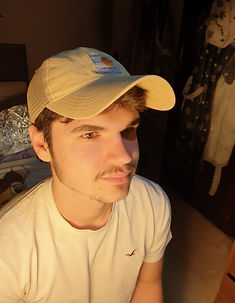
I felt this blue lighting was perfect it was visible without making the subject appear whimsical. However I also thought that the lighting worked very well without the gels it casts a really good shadow giving the atmosphere a mysterious feel and therefore creepier effect which exactly how the Kiss the girls scene made me feel. I decided this would be the photo I would show my focus group.
Survey:
Both these questions were asked to understand a potential target audience although I haven't researched my target audience yet it's good to understand where the data I've collected comes from. However I believe that my target audience would be teens and young adults just because of my personal experiences.
The majority of responses said they do enjoy horror films which suggests to me that I do have an audience within this age group of under 18-34. Although 33.33% said they didn't 18.52% said that it depends the rest of my question determined what each group particularly like or dislike about horror.
The majority of people enjoy horror which involve finding a killer which I'm happy with because this kind of investigative thriller/horror is what my short could evolve into. A lot people also picked being scared which heavily relies on my ability to be able to build tension within the scene. Furthermore some picked good characters which comes from me making a character that audience feel a connection to.
In this question I asked anyone who selected other to explain what they meant the only responses I took away was about about story lines. This is something I also think is very important and definitely be considered when creating my script and story board.
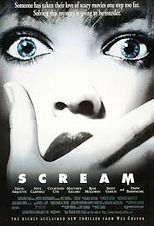
I haven't included all the answers I received in the photo however the films I saw appear most in the answers were; Silence of the lambs, It, the conjuring and Scream. This is good because Scream and silence of the lambs is the kind of horror I'm aiming to make so this assures me that they are enjoyed.
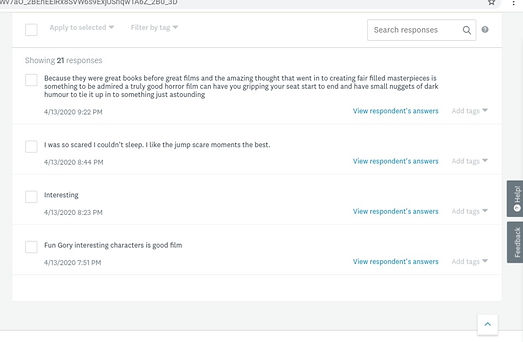
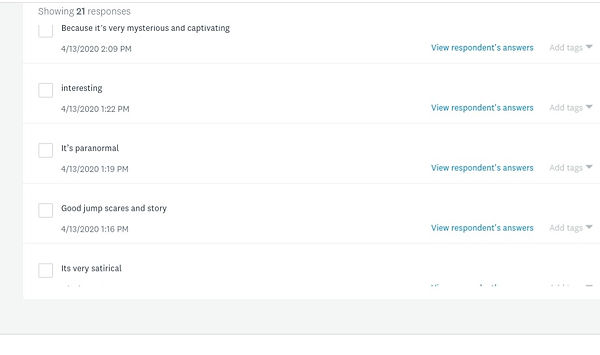
This question is why is the film you just picked your favourite. I found a lot of the answers involved the plot whether was just the story line or a plot twist which tells me this group rely heavily on a good narrative to enjoy a horror. This whole survey has proved to me that to make this short as successful as possible I need to focus on my planning especially my script and story board. Because of this I've decided to dedicate some research to tips of writing and planning a successful short.
Target Audience:
I got this information from the website Variety which credits their resources to the website Movio however I could not the find this information on that website. However the information they gave about the horror audience is as follows; 60% of the audience is made up of people aged between 15 and 30 years old, 51% is male, also it has a 33% larger minority audience than an average genre.
This means according to Movio's research like I assumed the audience is fairly young and also the split between gender is nearly equal. I feel this information helps to show that the people who took my survey are my target audience so their opinion reflects a typical horror fans opinion. Fortunately I feel my proposed idea fits well with what my target audience will connect with as I'm hoping to cast my main character as a young female. I feel this character will draw the most sympathy from my audience as young women often are stereotyped as naive and helpless particularly in media, this is something I'm going to manipulate to make my audience feel more of a connection to my main character.
Focus Group:
I decided to hold a focus group to determine whether the general public agreed with my opinions about the blue light in the Kiss the girls scene and overall whether it was worth using these lights in my project. This meant that I wasn't particularly concerned about the focus group containing my target audience as this was wasn't about the genre and instead I wanted a range of people.
Person 1:
-
40 years old
-
Male
-
Not my target audience
Person 2:
-
20 years old
-
Male
-
Perfectly fits my target audience
Person 3:
-
48 years old
-
Female
-
Not my target audience
To begin my focus group I showed them this photo without the blue gel.
I asked what were their first impressions of the photo including the person, the atmosphere or what might be happening.
Person 1:
"He looks very dark like he's in thought. He seems as if he's looking in the distance and is very moody."
Person 3:
"I disagree I feel like he's not really thinking about anything."
Person 2:
I think it looks like it's night time"
Conclusion:
I'm happy with the lighting in this photo especially because of person 1's comment my theme is very dark so I want my lighting to reflect this and it appears that it does.
Then I presented this photo and asked if they would consider the same things.
Person 3:
"He looks happy now"
"I feel it's the same photo but the lighting changes the mood"
Me:
"So how does the mood in the last one compare to this one"
Person 1:
"Darker"
Person 3:
"In the last one he seemed distant whereas now whatever he's thinking about has made him happy"
Me:
"Do you think it's the change in lighting or expression that has made you feel this way."
Person 3:
"He's got the same expression but the lighting has made a big difference."
Person 1:
"This photo feels colder."
Conclusion:
After this I felt a little disheartened this lighting was giving the opposite effect on the audience as I had wanted. Except person 1 saying it felt cold however later in the focus group I discovered it wasn't about the lighting.
Next I showed the group a clip from the Kiss the girls scene I had analysed and asked them to write down any thoughts and opinions about the scene.
Person 2:
"I felt the blue in the scene gave it a cold and lonely feel."
Me:
"That is very different from what was said about the blue photo"
Person 2:
"I think that person was just happier"
Person 1:
"I felt the suspense was heightened by the music and the lighting but also the lighting contrast between the light and the dark which gave me that hiding in the shadows feel. I think the blue has also made me feel like it's probably night time which makes the scene feel creepier."
Conclusion:
This made me feel better about my blue lighting as it gave the same effect to my focus group as it had given me. However it was obvious that my lighting wasn't giving the same effect so I decided to ask more about the photo that used blue lights.
Then I showed the blue photo I took and asked whether they had a different of opinion after seeing the Kiss the girls scene.
They all said no however person 1 said:
"I think it's his expression he looks happy"
Me:
"so do you think the blue lighting looks odd in this photo."
Person 1:
"Yes."
Conclusion:
I think after hearing this I realised I hadn't considered my subjects expression to be happy I was very focused on getting my lighting right that I wasn't paying attention to my subject. I feel this is a good learning experience for future focus groups I may hold that although I might be focusing on one particular thing it's important to also consider it as a whole. Overall however my focus group felt the same as I had predicted about the blue lighting and I think this has only confirmed that I should use it in my piece.
Screenwriting:
Because my survey had empathised to me how important the story line is in a horror and this was an area that I hadn't focused on very much in my previous projects I decided it was very important to research how to make a successful script. On my initial research I found the book Save the cat! The last book on screenwriting you'll ever need (Snyder, 2005). Although I could not obtain the book I found an episode of a podcast which explains and discusses the book.
https://youtu.be/MZQcc3ZpjEU
The first thing they discuss is the name Save the cat which comes from the idea that in order to have have a character liked in a story they can preform a small act of heroism or kindness such as saving a cat. This was something very useful to my story as I wanted my audience to be able to feel a connection to my main character in order to sympathise with her.
I continued my research and found out about Snyders story beats he discusses in the book I decided to explain and attempt to apply them to my story. Although I feel as though all the beats are probably too expansive for my short.
Opening image:
This beat is just the first thing the audience will see it should give away information about the setting simply. For me I think the opening image in my short will be the house where my film is set set at night time.
Set Up:
This is were it's seen how the main character usually is and often sets up an idea of what the main character needs. I'm not sure whether this beat is one I can use in my story however I also feel I might be able to simply show this, through the action of my character brushing her teeth, because all the audience really needs to know about the character is she is a normal person.
Theme stated:
Within this beat there should be the first signs of the main theme that will be conveyed in the story in my short this shall be the indication that there is something the character and audience should fear.
Catalyst:
This is when an incident takes place that moves the plot along often it's the introduction of the peace of the story being disrupted. This will be the moment in my short where the audience defiantly know that the main character is in danger because the audience is going to see a glimpse of the bad guy.
Debate:
This is moment when the main character can't decide what to do for example in my short the main character will debate whether to look outside because the feeling that theirs someone out there is growing.
Break into two:
The name of this beat refers to starting the second act of a story often this is when the protagonist decides to do the thing they were debating in the previous beat. This will be the scene when the main character opens the door and goes to check outside equally allowing the bad guy inside her house.
B story:
I will not use this beat as my film is only a short and tells just the one story but this beat is when the audience is introduced to another story often this is where a love interest comes into a film.
Fun and Games:
At this point of the story the protagonist explores the main concept of the film for example after a super hero discover they have powers this is the part where they have fun using them. I'm not sure how this concept would work in my short. This could be where my protagonist decides that no one is outside and goes back in her house.
Midpoint:
At this point the protagonist is either at their highest or lowest point in this beat the audience is reminded of the stakes of the plot. This is when I'll remind my audience that the bad guy is in her house and hopefully they will feel an increased amount of fear.
The bad guy closes in:
This is where the antagonist of the story reveals themselves or reemerges in my story this will be when the bad guy makes their first move with the intention to kill the protagonist.
All is lost:
This is the beat where the antagonist defeats the protagonist which creates the feeling that all is lost. I think for this beat I'm going to have my two characters have a struggle ending with the bad guy over powering my protagonist.
Dark night of the soul:
This is the moment when the protagonist realises they have been defeated for this beat in my project I'm going to have her plead and try to reason with the bad guy to show the audience she's not fighting anymore that she's lost hope.
Break into three:
This is when the the story enters its final act and this happens at the moment when the protagonist realises what they must do in order to defeat the antagonist. In my story this will be the point in which the main character spots a blunt object next to her.
Finale:
This is the final push in order for the protagonist to defeat the antagonist or for them to complete what they set out to do. In my short this will be when my protagonist will grab the blunt object next to them and hits the antagonist allowing them to escape outside.
Final image:
The purpose of this beat is to show how the protagonist's life is different since the events of the story take place. However the final image in my film will be my protagonist running out of the house and the antagonist just behind her until he catches up and grabs her.
Learning and utilising these beats has really helped me to plan my story out and give it proper structure. Now I feel as though I can starting writing my script understanding where my story is leading. I also looked into the Hero's journey theory but I found it very similar to the Save the cat theory which also fit my story better.









bottom of page